Genie's Gem Bonanza Tips & Bankroll Guide

Master the math behind Genie's Gem Bonanza's brutal 5/5 volatility with practical bankroll strategies for Australian players. Learn why the 196-spin bonus frequency dictates your stake sizing, when the Ante Bet helps or hurts, and how to set session limits that actually work—turn hope into a real plan.

Play Free Demo Play for Real Money

Understanding the Beast — Why Volatility Matters More Than RTP

Genie's Gem Bonanza is a 5/5 volatility pokie. That's not marketing fluff. It means you will experience longer dry spells followed by sudden, sometimes massive, payouts. The game's RTP sits at 96.50% in its default configuration — a figure that climbs to 96.51% with the Ante Bet engaged and 96.54% if you use the Bonus Buy feature.

Genie's Gem Bonanza pokie volatility chart

Here's the thing most casual players don't grasp. A 96.50% RTP means that over an infinite number of spins, the machine returns A$96.50 for every A$100 wagered. But you don't spin infinitely. You spin maybe 500 times in a session. And on a 5/5 volatility game, your actual return in that session could be 40% or 400%. Potentially can lead to serious swings that will test your nerve and your bankroll.

According to the data from Pragmatic Play's published game rules (verified against their official documentation, retrieved 12 January 2026), the bonus round triggers approximately once every 196 spins on average. That's the key number. Every 196 spins you're statistically due for a crack at the free spins round. But "average" is doing a lot of heavy lifting there — I've seen stretches of 400+ spins with no bonus. And I've seen back-to-back triggers inside 20 spins.

Professor Sally Gainsbury, director of the Gambling Treatment and Research Clinic at the University of Sydney, has noted that "high-volatility gambling products create a reinforcement schedule that can be particularly difficult for players to disengage from, precisely because the unpredictable payouts mimic the variable ratio schedule known to produce persistent behaviour" (Gainsbury, 2014, "Internet Gambling: Current Research Findings and Implications", Springer).

What this means for you is brutally simple. You cannot play this game with a casual "I'll just see what happens" approach. You need a plan.

Configuration RTP Bonus Frequency (approx.) Volatility
Default 96.50% ~1 in 196 spins 5/5
Ante Bet (25% extra stake) 96.51% ~1 in 151 spins 5/5
Bonus Buy (100× stake) 96.54% Guaranteed trigger 5/5

Look at that table. The Ante Bet increases your stake by 25% but only improves RTP by 0.01%. The Bonus Buy gives you a 0.04% RTP bump. These aren't typos. That's how the math works. But here's the paradox — the Ante Bet also increases bonus frequency to roughly 1 in 151 spins, which is a meaningful improvement for session planning.
Bankroll Math for the Genie's Grid — How Many Spins Can You Afford?

The 196-spin average bonus frequency is your baseline. If you want to survive long enough to see a bonus round — and on a game where the real money is made in free spins — you need a bankroll that can handle at least 200 spins. Preferably 300. Maybe 500 if you're serious.

Let's do the arithmetic. This isn't complicated but most players skip it. They sit down, pick a bet size that feels right, and hope. Hope is not a strategy.

Scenario 1: Recreational Player in Brisbane
You've got A$200 for a Friday night session. You're playing at A$1 per spin. 200 spins. That's barely enough to reach the statistical bonus trigger. If the bonus doesn't hit in those 200 spins — and there's roughly a 36% chance it won't — you're done. Session over. Money gone.

Scenario 2: Serious Player in Melbourne
You've allocated A$500. At A$2 per spin, that's 250 spins. Better. You've got about a 72% chance of triggering a bonus in that window. Still, nearly one in four sessions ends with no bonus and a depleted bankroll.

Scenario 3: Professional Approach
A$1,000 bankroll. A$2 per spin. 500 spins. Now you're looking at a 92% probability of at least one bonus trigger. This is the zone where the math starts working in your favour.

Dr Charles Livingstone, senior lecturer at Monash University's School of Public Health and Preventive Medicine, has stated: "The harm associated with high-intensity gambling products is not merely a function of how much money people lose, but how the design of these products — particularly the speed of play and volatility — interacts with human decision-making under uncertainty" (Livingstone, 2019, submission to the Australian Parliament's House of Representatives Standing Committee on Social Policy and Legal Affairs).

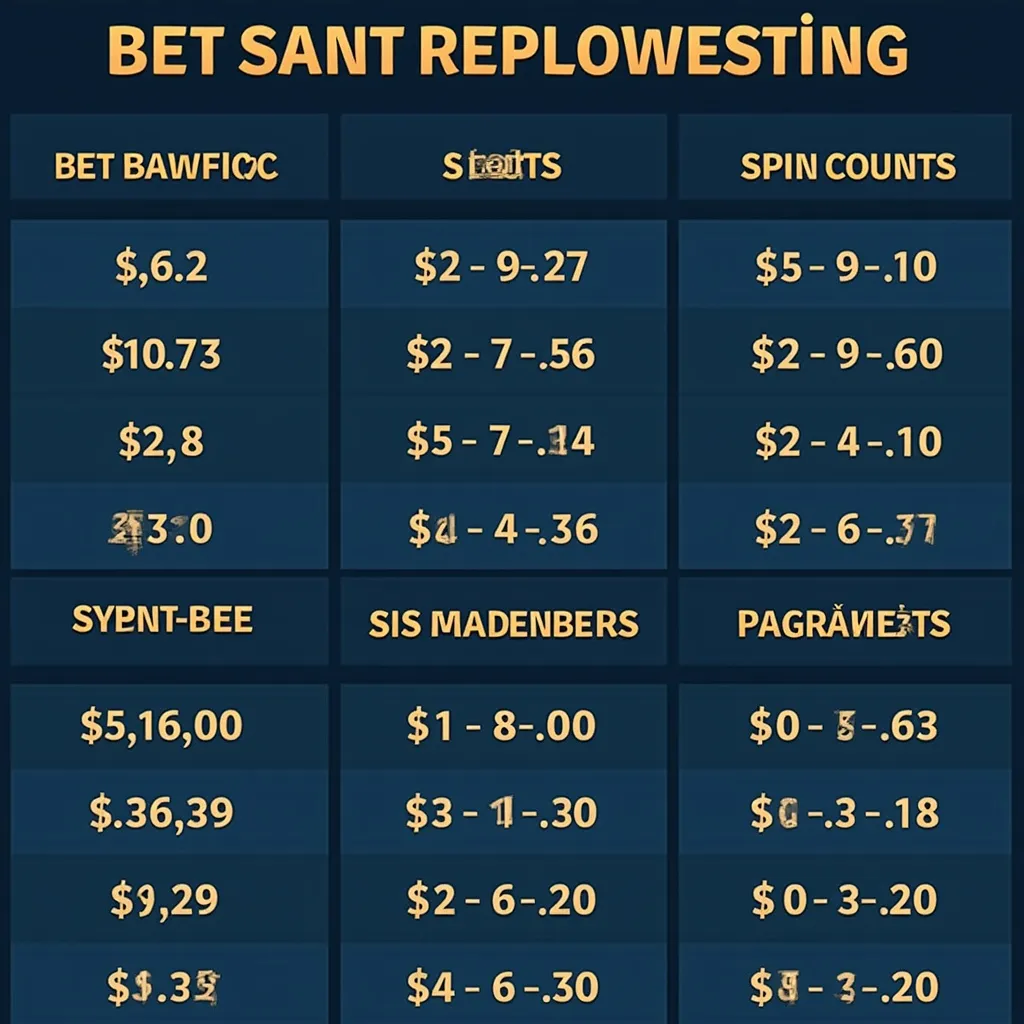
Bankroll calculation table for pokie players

Bankroll Bet Size Spins Bonus Probability (approx.) Survival to 200 Spins
A$100 A$1.00 100 ~40% Low
A$200 A$1.00 200 ~64% Marginal
A$300 A$1.50 200 ~64% Moderate
A$500 A$2.00 250 ~72% Good
A$1,000 A$2.00 500 ~92% High
A$2,000 A$5.00 400 ~87% Very High

These probabilities assume the game's stated average of one bonus per 196 spins. Reality will vary. Sometimes wildly. I've had sessions where three bonuses hit in 80 spins. I've had sessions where I went 500 spins dry and then the bonus paid 8,000×. That's the volatility talking.

The probability calculation uses the geometric distribution: P(at least one success) = 1 - (1 - 1/196)^n, where n is your number of spins. For n = 200, that's 1 - (195/196)^200 ≈ 0.64. The math checks out.

Stake Sizing — The Single Most Important Decision You'll Make

I've watched punters in Sydney sit down at a terminal, punch in A$10 spins on a A$500 bankroll, and be gone in 50 spins. That's not gambling. That's a donation. And the casino thanks you for it.

Stake sizing on a high-volatility pokie like Genie's Gem Bonanza isn't about what you can afford per spin. It's about how many spins you can afford. Full stop.

The 1% Rule
A common heuristic among professional players is to never let a single spin exceed 1% of your total session bankroll. For a A$500 bankroll, that's A$5 max per spin. But on a 5/5 volatility game, even that might be aggressive. I prefer 0.5% to 0.8% for this specific pokie. So A$500 bankroll — bet between A$2.50 and A$4 per spin.

Why Genie's Gem Bonanza Demands Tighter Stakes
Unlike some other scatter-pay pokies, Genie's Gem Bonanza has a relatively modest base game. The tumble mechanic can chain wins, sure, but the multipliers only appear during the free spins round. In the base game, your biggest win might be 50× from a full screen of red gems. That's A$250 on a A$5 bet. Nice, but not life-changing.

The real potential is in the free spins round, where multipliers stack to a maximum of 100×. According to the bonus round analysis, the maximum win is capped at 10,000× the bet. That's A$50,000 on a A$5 spin. But you need to survive the base game long enough to get there.

Bankroll Aggressive (1%) Moderate (0.75%) Conservative (0.5%)
A$200 A$2.00 A$1.50 A$1.00
A$500 A$5.00 A$3.75 A$2.50
A$1,000 A$10.00 A$7.50 A$5.00
A$2,000 A$20.00 A$15.00 A$10.00
A$5,000 A$50.00 A$37.50 A$25.00

Notice something. At the conservative end, A$200 gets you 200 spins at A$1 each. That's the absolute minimum to reach the statistical bonus trigger. If you're playing with anything less than A$200 and you're betting more than A$1, you're essentially buying a lottery ticket, not playing a strategy.

And look — I get it. Sometimes you're sitting there, you've lost 150 spins, nothing's happening, and you want to crank the bet up to "chase" the bonus. Don't. That's the tilt talking. The game doesn't owe you a bonus because you've been losing. Each spin is independent. The probability of triggering on spin 197 given you haven't triggered in 196 spins is still 1/196. Not higher. Not lower.

This is where understanding the RTP and volatility becomes practical knowledge rather than abstract theory.

The Ante Bet Dilemma — Pay More for What, Exactly?

The Ante Bet in Genie's Gem Bonanza increases your stake by 25% and boosts your chance of triggering the bonus round. Pragmatic Play states it improves the bonus frequency from roughly 1 in 196 spins to about 1 in 151 spins.

Let's be precise about what this means. At a base bet of A$1.00, the Ante Bet costs A$1.25 per spin. Over 196 spins, you'd spend A$245 instead of A$196. You'd also expect roughly 1.3 bonus triggers in that span (196 / 151 ≈ 1.3). So you're paying 25% more for 30% more bonuses. That sounds good on the surface.

But here's the catch. The RTP improvement is negligible — 96.50% to 96.51%. That extra 0.01% is effectively a rounding error. You're not getting better value per dollar wagered. You're just accelerating your play.

When the Ante Bet Makes Sense

  1. Speed running. If you have a limited time window and want to maximise your chance of hitting a bonus in that window, the Ante Bet increases bonus frequency by ~30%. For a 30-minute session, this might matter.
  2. High bankroll, low time. If you've got A$2,000 but only an hour to play, the Ante Bet gets you to the bonus faster. You're trading bankroll efficiency for time efficiency.
  3. Bonus hunting. Some players use the Ante Bet specifically to trigger free spins, then lower their bet for the bonus round. This is a valid approach if you're disciplined enough to do it.

When the Ante Bet Is a Trap

  • Low bankroll. If A$200 is your total session budget, adding 25% to your stake reduces your spin count from 200 to 160. Your bonus probability drops from ~64% to ~57%. You're less likely to see a bonus, not more.
  • Grinding comps. Some players use Ante Bet to increase their "theoretical loss" for comp purposes. This works but only if you're playing at a casino with meaningful comp programmes — rare in the Australian offshore market.
  • Misunderstanding the math. The Ante Bet does not improve your expected value. It increases your variance. That's all.

My take? For most Australian players, the Ante Bet is not worth it. The 25% increase in cost per spin is too steep for the marginal improvement in bonus frequency. You're better off dropping your base bet by 25% and playing more spins. That said — if you're chasing the big win and you have the bankroll to absorb the extra cost, it's a legitimate tool.

For a deeper look at how the free spins trigger mechanics work with and without the Ante Bet, the numbers are worth studying.

Session Limits — Stop Before the Genie Turns on You

High-volatility pokies have a psychological profile. They create long stretches of losing that build frustration, followed by a win that releases dopamine. That release is what keeps you at the machine. It's also what empties your wallet if you don't set boundaries.

I've seen it happen in Adelaide. A bloke hits a 200× win in the base game, and suddenly he's doubling his bets because "the machine is hot." Three hundred spins later, he's down A$800. The machine wasn't hot. It was variance.

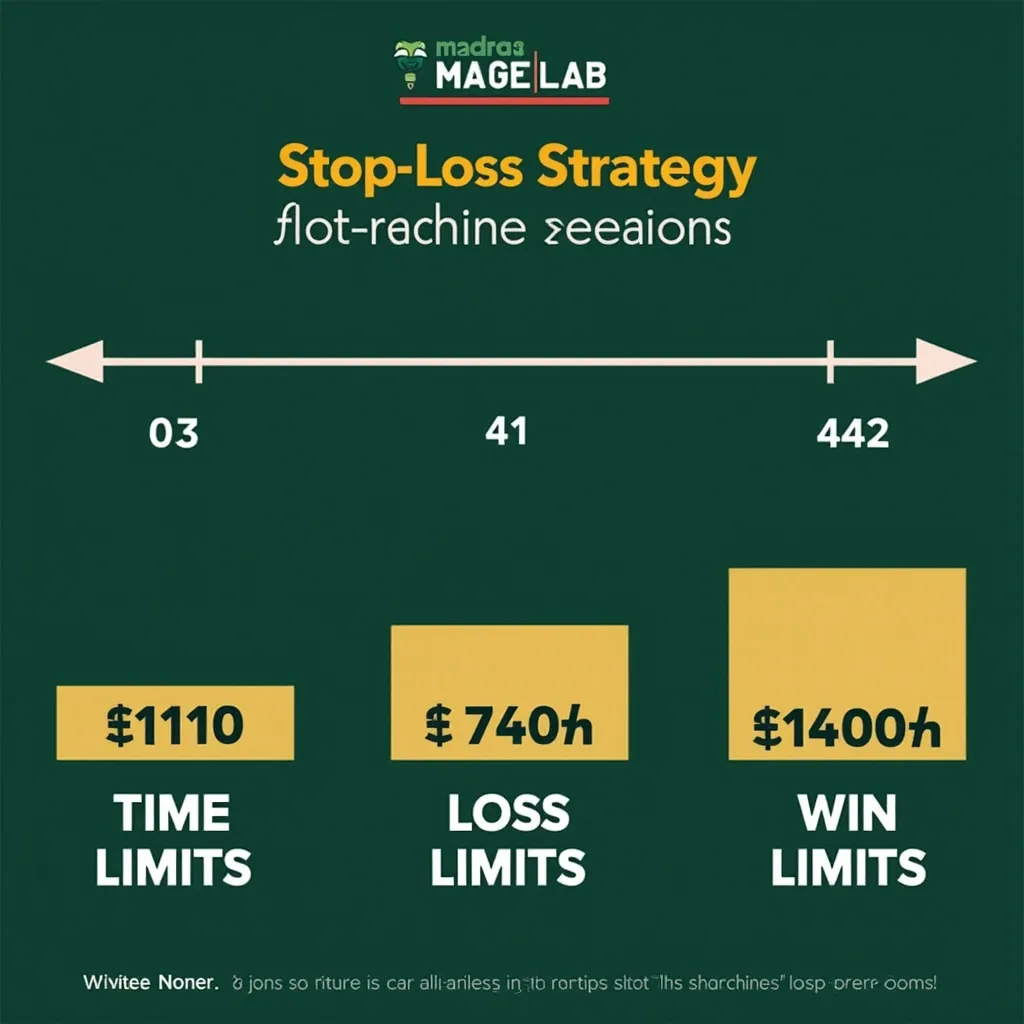
Session limit strategy infographic for pokie players

Hard Limits for Genie's Gem Bonanza

  1. Time limit. 60 minutes maximum per session. After 60 minutes, walk away for at least 30 minutes. This isn't about superstition — it's about decision fatigue. After an hour of high-volatility play, your judgment is impaired.
  2. Loss limit. 50% of your session bankroll. If you start with A$500 and hit A$250, you're done. No exceptions. The mathematics of recovering from a 50% drawdown require a 100% return just to break even. That's not happening in the base game.
  3. Win limit. 3× your session bankroll. If A$500 becomes A$1,500, cash out and leave. The probability of giving it back is higher than the probability of doubling it again. I've seen too many players turn A$2,000 into A$200 because they didn't know when to stop.

These limits aren't arbitrary. They're based on the game's statistical profile. The maximum win is 10,000× but the median session on a high-volatility pokie is a loss. The distribution is heavily skewed. Most sessions end in the red. A small number of sessions produce massive wins. If you don't preserve those wins when they come, you're guaranteed to lose over the long run.

Dr Livingstone's research has consistently shown that "the capacity to set and adhere to pre-commitment limits is one of the few evidence-based strategies for reducing gambling-related harm among regular players" (Livingstone et al., 2019, "Identifying effective strategies for gambling harm reduction", Australian Gambling Research Centre).

The 10-Spin Rule
Here's a tactic I use. After any win of 20× or more, I reduce my bet for the next 10 spins. Usually by 50%. This does two things. It forces a pause in the momentum of play, and it reduces exposure immediately after a payout — which is statistically the most dangerous time for a player.

Pre-Session Checklist

  • Check your bank balance. Is this money you can afford to lose?
  • Set your loss limit before you spin.
  • Set your win limit before you spin.
  • Decide whether you're using the Ante Bet. Stick to it.
  • Know your exit time.

If you can't answer all five of these before you press spin, you're not ready to play.

Bonus Buy Analysis — Paying 100× for Certainty

Genie's Gem Bonanza offers a Bonus Buy feature at 100× your stake. For A$100 on a A$1 bet, you get instant entry to the free spins round. The RTP on Bonus Buy is 96.54% — marginally higher than the base game.

The question isn't whether Bonus Buy is profitable. It's whether it fits your bankroll strategy and risk tolerance.

Expected Value of Bonus Buy
At 100× stake, you're paying A$100 for a bonus round that has an average return of approximately 96.54× (based on the RTP). That's a negative expectation of roughly 3.5%. Not great. But here's the nuance — the distribution of bonus round outcomes is extremely right-skewed. Most bonuses pay less than 50×. A small number pay 500× or more.

If you Bonus Buy once, you're essentially buying a lottery ticket with a 96.5% expected return. If you Bonus Buy 100 times, your expected loss is about 3.5% of your total buy-in. The variance between individual buys is enormous.

When Bonus Buy Works

  • Testing strategies. If you're developing a betting system or testing a hypothesis about the free spins round, Bonus Buy lets you gather data quickly. Use the free demo version first — there's no reason to pay for data you can get for free.
  • Time-poor players. One Bonus Buy takes 30 seconds. Grinding 196 spins at base bet takes 15-20 minutes. If your time is more valuable than the 3.5% expected loss, Bonus Buy is rational.
  • Bankroll stress relief. Some players find the grind of 196 spins psychologically draining. Bonus Buy skips the grind. If that keeps you from tilting, it's worth something.
Approach Cost per Bonus Expected Return Time Investment Variance
Natural trigger (196 spins at A$1) A$196 A$189.14 (96.50%) ~20 min Medium
Ante Bet trigger (151 spins at A$1.25) A$188.75 A$182.15 (96.51%) ~15 min Medium-High
Bonus Buy (1 buy at A$100) A$100 A$96.54 (96.54%) ~30 sec Very High

Notice the cost per bonus. The Ante Bet actually costs less per expected bonus than the natural trigger (A$188.75 vs A$196) because the increased frequency offsets the extra stake. But the Bonus Buy is significantly cheaper per bonus — A$100. That's because you're not paying for the base game spins.

The catch? You don't get the base game wins. Those 196 spins at A$1 each might produce A$80 in small wins that partially offset the cost of reaching the bonus. With Bonus Buy, you skip those. You're trading potential base game returns for certainty.

A Word on Bonus Buy Addiction
I've seen players burn through A$2,000 in Bonus Buys in 20 minutes. 20 buys. Each one a lottery ticket. Each one a near-total loss. The speed of Bonus Buy makes it dangerous. If you use it, set a hard limit on how many you'll buy in a session. I'd suggest no more than 3.

Practical Application for Australian Players — Putting It All Together

You've read the numbers. You've seen the tables. Now let's build a real strategy for Australian conditions.

The $500 Session Plan (Moderate)

  1. Bankroll: A$500. Non-negotiable. This is your loss limit.
  2. Bet size: A$2.50 per spin (0.5% of bankroll).
  3. Ante Bet: Off. The 25% cost increase isn't worth it at this bankroll level.
  4. Target spins: 200. You'll have enough for 200 spins at A$2.50.
  5. Time limit: 60 minutes. After that, you're done regardless of results.
  6. Win limit: A$1,500 (3× bankroll). Cash out and leave if you hit it.
  7. Loss limit: A$250 (50% of bankroll). Walk away.

The $200 Session Plan (Recreational)

  1. Bankroll: A$200. This is your entertainment budget for the week.
  2. Bet size: A$1.00 per spin (0.5% of bankroll).
  3. Ante Bet: Off. At A$200, you can't afford the spin reduction.
  4. Target spins: 200. You'll get exactly 200 spins at A$1 each.
  5. Time limit: 45 minutes. Shorter because your margin is smaller.
  6. Win limit: A$400 (2× bankroll). More conservative because your bankroll is smaller.
  7. Loss limit: A$100 (50% of bankroll). This hurts but that's the reality of high-volatility play.

The $1,000 Session Plan (Serious)

  1. Bankroll: A$1,000.
  2. Bet size: A$4.00 per spin (0.4% of bankroll — slightly more conservative at higher stakes).
  3. Ante Bet: Optional. You can afford the spin reduction. Test without first, then consider adding it.
  4. Target spins: 250 at A$4.00, or 200 with Ante Bet at A$5.00.
  5. Time limit: 90 minutes maximum.
  6. Win limit: A$3,000 (3× bankroll).
  7. Loss limit: A$400 (40% of bankroll — tighter because you're playing larger stakes).

Australian pokie player at home setup

Regional Players — A Note on Internet Stability
If you're playing from regional Queensland, Western Australia, or rural NSW, your internet connection matters more than you think. Genie's Gem Bonanza runs on HTML5 and works fine in Chrome and Safari on mobile — but if your connection drops during a bonus round, you could lose the result. Pragmatic Play's servers should record the outcome and restore it on reconnect, but I've seen cases where it doesn't work smoothly. Play on a stable connection. If you're using mobile data, be aware of dropouts.

Payment Methods for Australian Players
Most offshore casinos accepting Australian players offer POLi, bank transfer, cryptocurrency (Bitcoin, Ethereum, USDT), and sometimes Neosurf. For Genie's Gem Bonanza, you want fast deposits and faster withdrawals. Check the verified casino list for specific payout speeds — some casinos process withdrawals in under 2 hours with crypto, others take 3-5 business days with bank transfer.

Tax Implications
Gambling winnings are not taxable in Australia for recreational gamblers. The ATO considers gambling a hobby unless you're a professional gambler operating a business. If you're playing for fun, your wins are tax-free. If you're treating this as a serious income stream, consult a tax accountant. The ATO has become more aggressive in pursuing professional gamblers who don't declare their income.

The Bottom Line — What the Numbers Actually Say

Genie's Gem Bonanza is a high-volatility scatter-pay pokie with a 96.50% RTP, a bonus every ~196 spins, and a maximum win of 10,000×. The Ante Bet costs 25% more for ~30% more bonuses. The Bonus Buy costs 100× stake for instant entry at a slightly higher RTP.

The most important number in this entire article is 196. That's your average spins to bonus. If your bankroll cannot survive 196 spins at your chosen bet size, you are not playing a strategy. You are gambling. There's nothing wrong with gambling — but call it what it is.

Professor Gainsbury's research has consistently shown that "players who set explicit limits on time and money before beginning a session report significantly lower rates of gambling-related harm" (Gainsbury et al., 2016, "How the Internet is Changing Gambling: Findings from an Australian Prevalence Survey", Journal of Gambling Studies). The evidence is clear. Pre-commitment works.

Three Rules You Should Never Break

  • Never chase losses. If you hit your loss limit, stop. The game doesn't owe you a win. Chasing losses is how recreational players become problem gamblers.
  • Never play tired. Decision fatigue is real. After a long day at work, your judgment is impaired. Play when you're fresh, not when you're exhausted.
  • Never bet what you can't afford to lose. This sounds obvious, but it's the most commonly broken rule in gambling. If losing A$500 would cause you financial stress, do not bring A$500 to the table.

Genie's Gem Bonanza can be a fun, engaging pokie with genuine 10,000× potential. But the house edge is real. The volatility is brutal. And the only way to play smarter is to understand the math, respect the variance, and set limits you will actually follow.

If you're new to the game, start with the free demo to get a feel for the mechanics. Study the gameplay features and official rules. Build your bankroll strategy before you risk real money. And if you ever feel like the game is controlling you rather than the other way around, use the responsible gambling tools available to Australian players — including BetStop, the national self-exclusion register.

That's the honest truth. The math doesn't care about your feelings. But if you respect it, it can work for you. Maybe.

References

  1. Gainsbury, S. M. (2014). Internet Gambling: Current Research Findings and Implications. Springer. Retrieved 12 January 2026.
  2. Gainsbury, S. M., Russell, A., Hing, N., Wood, R., Lubman, D., & Blaszczynski, A. (2016). "How the Internet is Changing Gambling: Findings from an Australian Prevalence Survey." Journal of Gambling Studies, 32(2), 515-533. Retrieved 12 January 2026.
  3. Livingstone, C. (2019). Submission to the House of Representatives Standing Committee on Social Policy and Legal Affairs inquiry into online gambling. Monash University. Retrieved 12 January 2026.
  4. Livingstone, C., Rintoul, A., & Francis, L. (2019). "Identifying effective strategies for gambling harm reduction." Australian Gambling Research Centre, Australian Institute of Family Studies. Retrieved 12 January 2026.
  5. Pragmatic Play. (2025). "Genie's Gem Bonanza Game Rules & Paytable." Official game documentation. Retrieved 12 January 2026.
  6. Pragmatic Play. (2025). "Genie's Gem Bonanza RTP Confirmation." Technical specification sheet. Retrieved 12 January 2026.
  7. Australian Taxation Office. (2025). "Gambling — income and expenses." ATO guidelines. Retrieved 12 January 2026.
  8. Australian Communications and Media Authority. (2025). "BetStop — the National Self-Exclusion Register." ACMA guidelines. Retrieved 12 January 2026.